


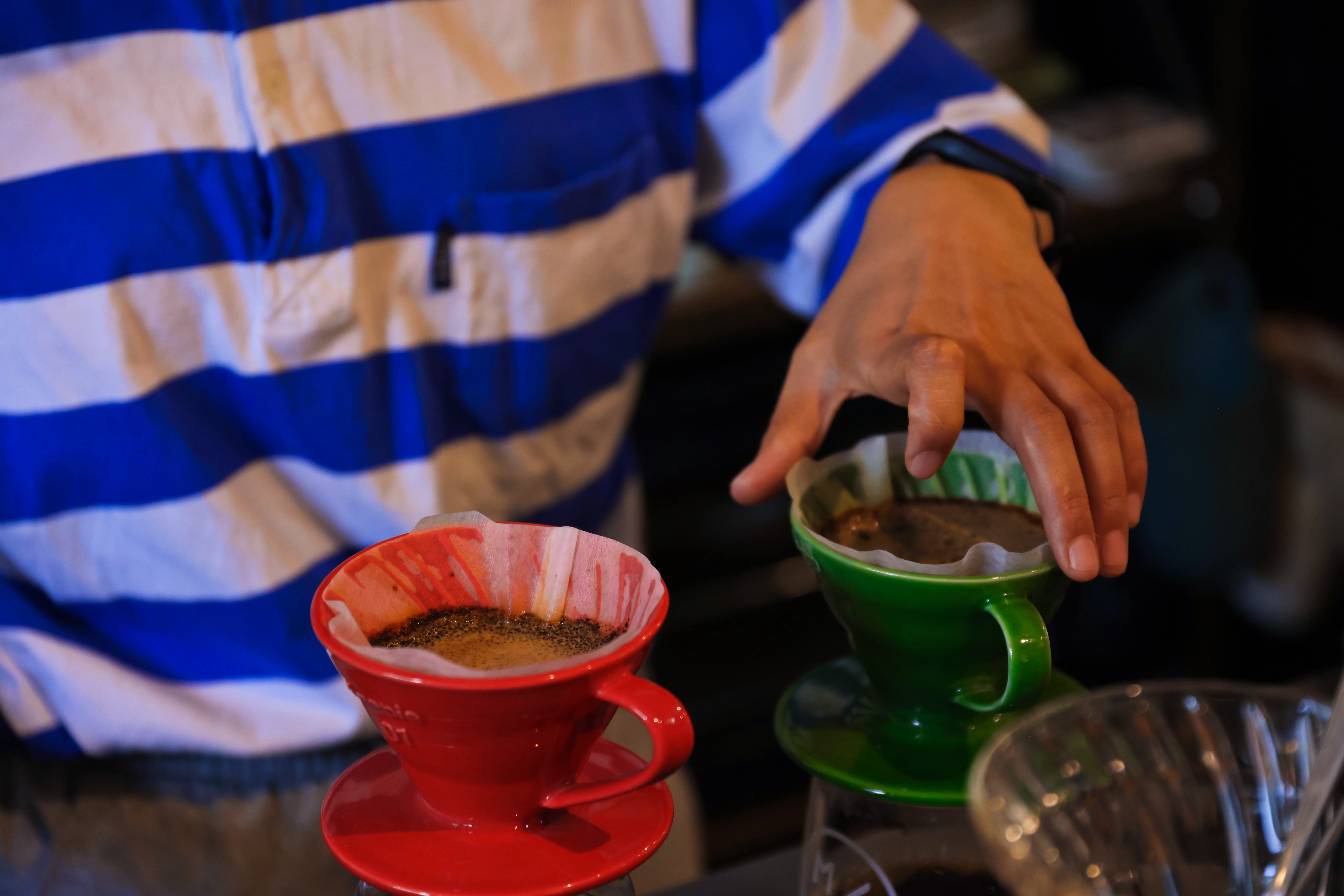
Photo by Yuchen Shi (Eason), Three Primary Colors
by Catherine Chandra
Read the Faculty Introduction
The rise of coffee culture in China is as rich as its flavor, and nowhere is this more evident than in Shanghai, where local coffee shops strive to enhance their market presence. The city is experiencing a shift from traditional tea consumption to a growing coffee culture, reflecting both global trends and China’s rapid urban development (Zhu 199). These shifts are causing a growing consumer market for coffee, complementary to Shanghai’s urban lifestyle, as shown by its 9,553 coffee shops as of 2023, the most coffee shops for a city globally (He).
A key factor in the success of businesses in a competitive market is the Unique Selling Proposition (USP)—a distinct characteristic or value that differentiates a business from its competitors. For local coffee shops, a well-defined USP allows them to stand out against major chains by offering specialized products, personalized experiences, or culturally resonant themes that appeal to niche consumer segments. Developing a strong USP is particularly crucial in Shanghai’s saturated coffee market, where large brands like Luckin, Manner, and Starbucks dominate with economies of scale, aggressive pricing, and widespread brand recognition.
This essay explores strategic marketing and product differentiation as tools that can empower local coffee shops to enhance their market attractiveness. A case study of Lake Roast Café (湖水焙煎室 Húshuǐ bèijiānshì) illustrates how an independent coffee shop can leverage its USP by integrating both Japanese and Chinese cultural elements into its branding and product offerings. Through a market analysis and an exploration of marketing tools like the 4Ps framework (product, price, place, and promotion), this research examines how independent coffee shops can strengthen their position and cultivate consumer loyalty in Shanghai’s competitive coffee market.
In Shanghai’s competitive market, local independent coffee shops can enhance their appeal by adopting clear USPs that focus on strategic marketing strategies and product differentiation, emphasizing local flavors, personalized customer experiences, and innovative branding approaches.
Market Analysis: China’s and the U.S.’s Major Coffee Chains in Shanghai
Shanghai's coffee market is part of a broader national trend in China, where coffee consumption is expected to see a Compound Annual Growth Rate (CAGR)—a measure of the average annual growth rate over a specified period, accounting for compounding effects—of approximately 1.90% from 2024 to 2029 (“China Coffee”). By 2024, the coffee industry in China is estimated to have a market volume of $2.1 billion, with a forecast to reach $2.3 billion by 2029 (Wood). This steady growth trajectory is seen in cities like Shanghai, where the adoption of Western lifestyles and increased disposable income have fueled rising coffee consumption.
The market is heavily dominated by major chains such as Starbucks, Luckin Coffee, and Manner Coffee, which use their economies of scale to maintain a strong market presence. Starbucks, with over 1000 outlets in Shanghai alone, controls roughly 13.6% of the market share in the city’s coffee chain sector (Blazyte). This dominance is supported by its global brand recognition and efficient supply chain management, which allows them to maintain reduced per-unit costs and a strong negotiating stance with suppliers, thus enhancing its profitability and market reach (Meilani 76–78).
Luckin Coffee, a major local chain known for its aggressive expansion strategy, has significantly boosted its sales through coffee delivery and mobile ordering in China, operating over 13,273 stores nationwide (Neate). By integrating AI-powered dynamic pricing and user behavior analytics, Luckin tailors promotions and discounts to individual customers, further driving sales and customer retention. This approach caters to China’s fast-paced, digital-first consumer culture, enabling the company to rapidly gain market share. The scale of Luckin’s operations also allows for significant reductions in operational costs, reinforcing its competitive pricing strategy (Shang 108).
Similarly, Manner Coffee, although smaller in scale compared to Starbucks and Luckin, uses its strategic placement in high-traffic areas to attract customers. Since its founding as a single store in 2015, Manner has expanded to over 300 locations across China, with more than 150 of these in Shanghai alone (Chu 276). This rapid growth reflects its effective marketing strategies and streamlined service model. The chain’s ability to maintain low operational costs, combined with target collaboration through an online and offline promotion, allows it to thrive in the competitive Shanghai market (Chu 276-278).
Marketing Strategies: Building Brand Loyalty in a Competitive Market
Local coffee shops can develop a competitive advantage by focusing on the 4Ps of marketing: Product, Price, Place, and Promotion, incorporating from both local successes and international strategies.
Product Strategy: Innovating to Meet Local Tastes and Preferences
The history of coffee culture in Shanghai reflects a shift towards a wide range of coffee experiences, from traditional to innovative, locally-inspired beverages. Luckin Coffee's innovative approach to product offerings are their lattes like raw coconut latte, velvet latte and thick milk latte. These products have played a significant role in Luckin Coffee’s rapid growth by appealing to consumer preferences for unique, customizable, and trend-driven beverages. This suggests that local coffee shops should focus on specific product innovations to cater to the varied tastes of Shanghai's consumers (Shang 107–108). For instance, incorporating unique local flavors can create a niche market based on USP, as seen with the popularity of localized coffee flavors like Moutai coffee and black sesame latte (Global Times).
Price Strategy: Balancing Cost and Quality
Affordability can play a crucial role in attracting a broad customer base. Manner Coffee's strategy of providing high-quality coffee at accessible prices has proven successful, illustrating that competitive pricing can attract price-sensitive segments of the market without compromising on quality (Chu 276). Local shops can adopt similar pricing strategies by understanding and adapting to their specific customer base. Additionally, they can explore innovative pricing models, such as bundle deals or subscription services, to incentivize repeat purchases and foster customer loyalty (Kucher). By striking the right balance between affordability and perceived value, local coffee shops can effectively position themselves as accessible alternatives to premium chains without compromising on quality.
Place Strategy: Strategic Store Locations in Shanghai
For local coffee shops in Shanghai, replicating Starbucks’ strategic placement of outlets in prime locations might pose challenges, especially regarding capital requirements. Finding a prime location in Shanghai's neighborhoods or commercial districts often comes with an expensive rent, which may be discouraging for small, independent coffee shops with limited resources. In such cases, these coffee shops can consider alternative strategies for their place strategy. A possible approach is to focus on identifying areas that, while not in the center of prime districts, still offer convenience and accessibility to customers. These areas could be emerging neighborhoods with growing residential or commercial developments, where rental costs might be relatively lower compared to established prime locations (Greene). By targeting these areas, coffee shops can access a customer base that seeks convenience and quality without necessarily demanding a premium location.
Moreover, distance to public transportation is important for customers. Local coffee shops can prioritize locations that are close to metro stations, bus stops, or major transportation nodes, making it convenient for commuters and residents to visit them. This approach not only enhances accessibility but also reduces the reliance on prime locations, thereby mitigating the financial burden associated with high rental costs. In cases where securing capital for renting a prime location is challenging, local coffee shops can explore alternative financing options, such as seeking investment from private investors or leveraging crowdfunding platforms. Furthermore, they can consider borrowing from banks or financial institutions, provided they have a solid business plan and creditworthiness to support their loan applications.
Promotion Strategy: Battle for a Market Presence
In developing an effective promotion strategy for local coffee shops in Shanghai, it's essential to recognize the preferences of Shanghai consumers, who often prioritize aesthetics and ambiance when selecting cafes (Jiang). Utilizing social media platforms such as Douyin (抖音), Dazhong Dianping (大众点评), and Xiaohongshu (小红书) can also significantly increase a cafe's visibility and appeal to potential customers. To maximize on this trend, cafe owners can focus on creating a distinct concept or theme for their coffee shop that connects with their target audience. By offering a unique ambiance that is aesthetically pleasing and inviting, cafes can naturally attract more visitors, both online and offline (Suren).
With an aesthetic concept or theme that aligns with their brand identity and target audience preferences, coffee shops can effectively differentiate themselves from competitors and generate their own USP through user-generated content on social media platforms. As customers share photos and videos of their café experience online, they inadvertently promote the café within their social networks, driving organic digital marketing and attracting more foot traffic.
Product Differentiation Strategy: Crafting Unique Experiences for Consumers
Local coffee shops in Shanghai can use product differentiation strategies similar to Starbucks, but adapt them to suit their smaller scale and resources. While they may not have the same economies of scale as major chains, they can still differentiate themselves by focusing on quality, uniqueness, customer experience, and creativity (Zhang). An approach local coffee shops can take is to prioritize the sourcing of high-quality coffee beans from reputable suppliers, despite being on a smaller scale. Instead of sourcing different types of beans from various regions around the world like Starbucks, they can focus on a few types of beans while establishing partnerships with local or regional coffee growers. By emphasizing the quality and unique characteristics of locally sourced beans, they can offer customers a distinct coffee experience that highlights the flavors and profiles of the region (Pocono Dessert Co.).
Furthermore, as Shanghai-based food writer Jiang Yaling explains in a 2021 article for Sixth Tone, a digital media outlet known for its in-depth reporting on Chinese society and culture, local coffee shops can differentiate themselves by creating a cozy and inviting ambiance that resonates with Shanghai consumers. While they may not have the resources to invest in elaborate store designs or extensive amenities, they can focus on simple yet thoughtful touches that enhance the customer experience (Jiang). By paying attention to details such as decor, lighting, and music, they can create a welcoming atmosphere that encourages customers to stay and enjoy their coffee.
Additionally, local coffee shops can differentiate their products through creativity and innovation, even within the constraints of a smaller scale operation. While they may not be able to offer the same level of menu variety as Starbucks, they can focus on developing signature drinks or specialty blends that showcase their unique identity. By experimenting with locally-sourced ingredients, seasonal flavors, and cultural influences, they can create a menu that stands out from larger chains and appeals to local tastes. Paul Smith, a writer and blogger who explores Shanghai’s evolving café culture, says: "In Shanghai, I was finding an approach to signature drinks that were balanced and that complemented rather than overpowered the coffee.”
Moreover, local coffee shops can differentiate themselves by emphasizing personalized customer service and community engagement. Although they may not have the same resources for extensive training programs, they can build strong relationships with their customers through genuine interactions and personalized recommendations. Hosting coffee-tasting events or workshops can also be a possibility to build a loyal customer base and differentiate themselves from major chain stores (PJ’s Coffee).
The flexibility and adaptability of local coffee shops also serve as advantages in a competitive market environment. Unlike major chains, these local coffee shops can respond quickly to changing consumer preferences and market trends. By staying agile and responsive to customer feedback, local coffee shops can tailor their offerings and marketing strategies to meet evolving demands, thereby enhancing their relevance and appeal. Additionally, authenticity emerges as a powerful differentiator for local coffee shops. Embracing local ingredients, supporting sustainable practices, and highlighting cultural influences can connect with consumers seeking genuine experiences, distinguishing local coffee shops from mass-produced chain stores (Duggan).
Case Study: Lake Roast Café (湖水焙煎室)
In an interview with Mr. David Liu, the owner of Lake Roast Café (湖水焙煎室), he mentioned that the core concept of the café is a harmonious blend of Japanese and Chinese culture. This fusion is evident in both the ambience and the coffee experience. Upon entering the café, customers are immersed in an atmosphere that seamlessly combines Japanese aesthetics and Chinese design elements—from Japanese script adorning the walls to Chinese motifs in carefully-chosen furnishings such as curtains, doors, and even coffee cups. “I wanted to create something that was renowned for its specialty in filter coffee and unique blends like dirty sea, osmanthus fermented rice with coffee, apple coffee with cinnamon,” said Mr. Liu, a Shanghainese who studied in Japan. His time there inspired him to incorporate Japanese brewing techniques, particularly hand-filtered methods, into the café’s operations while using locally-sourced Chinese coffee beans, particularly from Yunnan. This strategy not only highlights traditional craftsmanship but also caters to Shanghai’s growing demand for high-quality, artisanal coffee.
His cafe’s product differentiation is characterized by its fusion menu, which integrates Japanese brewing precision with Chinese coffee culture and ingredients. Unlike many cafés that rely on mass-market coffee blends, it prioritizes handcrafted, small-batch brews that reflect the nuanced flavors of Yunnan and Ethiopian coffee beans. This focus on sourcing high-quality beans while maintaining accessible pricing (ranging from 18 to 40 RMB) ensures that the café attracts a broad range of customers—both those who value affordability and those who seek specialty coffee experiences.
Beyond its product offerings, the café’s location strategy plays a crucial role in its appeal. Situated near Metro lines 1 and 14, it remains highly accessible while avoiding the premium costs of city-center locations. This decision reflects an effective place strategy, capturing high foot traffic without the burden of excessive rent. Additionally, Lake Roast Café’s promotion strategy aligns with its thematic concept. The Chinese-Japanese aesthetic not only enhances the in-store experience but also creates a visually striking atmosphere that appeals to social media users. Many customers share photos of the café’s carefully curated interior and unique beverages, resulting in organic digital promotion that enhances its market presence.
“The marketing approach of my coffee has been to create a brand that tells a story, one that connects with consumers seeking not just a cup of coffee, but an immersive cultural experience,” said Mr. Liu. This approach appeals to a diverse demographic, attracting both young consumers drawn to specialty coffee and older consumers who appreciate craftsmanship and cultural heritage. To further build a loyal customer base, he also hosts regular events focused on coffee appreciation and education.
Through Mr. Liu's vision and execution, the cafe has crafted a USP to enhance its market attractiveness in comparison to major chains like Luckin, Manner, and Starbucks. Looking ahead, Lake Roast Café plans to keep up with trends, and look for opportunities to expand and open at other locations throughout the city.
Conclusion: Developing a Unique Identity with Effective Strategies
The inquiry into the strategies that local independent coffee shops in Shanghai can employ to distinguish themselves in a market dominated by major chains reveals an approach to achieving competitive advantage. The importance of the marketing and product differentiation strategies that have been illustrated in this research is summarized by the examination of local flavor integration, distinctive ambiances, and strategic positioning that appeal to both local and international tastes of Shanghai's diverse population. The significance of using the 4Ps of marketing—Product, Price, Place, and Promotion—has been evident in the context of Shanghai's coffee market. The development of unique products that synthesize local and international tastes, as observed with Lake Roast Café’s offerings, serves as an example to the effectiveness of such differentiation. By introducing inventive drinks and employing culturally resonant themes, local cafes can create a compelling alternative to the major presence of large chains.
In pricing strategies, the discussion highlighted the importance of setting price points that reflect the value proposition of local cafes while remaining accessible to a broad customer base. Regarding place, the strategic location of independent coffee shops near transportation hubs and outside of premium-priced city centers can offer competitive advantages. Promotion strategies that capitalize on the visual and cultural appeal of the coffee shops, particularly in an era where social media is a huge factor, have demonstrated their importance. Through this research, it is evident that local independent coffee shops in Shanghai have the opportunity to enhance their market attractiveness through deliberate marketing strategies and product differentiation. By emphasizing local flavors, personalized customer experiences, and adopting a USP, these coffee shops can not only compete but also stand out despite the saturation of major chains.
The case study of Lake Roast Café provides valuable insights into the marketing and product differentiation strategies of a single local coffee shop in Shanghai. However, the study's focus on just one cafe limits the generalizability and applicability of the findings across the diverse landscape of independent coffee shops in the region. Future research should expand the scope by including a broader range of coffee shops, varying in size, location, and target demographic. Conducting interviews with multiple cafe shop owners would provide a richer, more comprehensive understanding of the different strategies employed to compete against major chains like Luckin, Manner, and Starbucks.
Future research should focus on the dynamic consumer behaviors in Shanghai's coffee market, particularly how local preferences evolve in response to global coffee trends. This could offer invaluable insights into how local shops might continuously adapt their marketing strategies to sustain relevance and competitiveness. Further investigation into the impacts of international coffee culture on local markets could also provide strategies for integrating global influences without sacrificing the unique local identity of Shanghai's coffee shops.
Thus, for local coffee shops in Shanghai to thrive in a competitive market, an effective application of differentiated marketing strategies tailored to their unique strengths and local consumer preferences is essential. By focusing on innovative product offerings, strategic pricing, optimal placement, and compelling promotion, these local coffee shops can enhance their market position and ensure sustainable growth in a highly competitive market.
Works Cited
Blazyte, Agne. "Market Share of Leading Café/Bar Brands in China 2016-2022." Statista, 15 Feb. 2024,
www.statista.com/statistics/429972/market-share-of-leading-cafe-bar-brands-in-ch ina/. Accessed 22 Apr. 2024.
"China Coffee Market Exhibits Steady Growth with Projected CAGR of 1.90% from 2024 to 2029." GlobeNewswire, 28 Mar. 2024,
www.globenewswire.com/en/news-release/2024/03/28/2854548/28124/en/China Coffee-Market-Exhibits-Steady-Growth-with-Projected-CAGR-of-1-90-from-202 4-to-2029.html. Accessed 22 Apr. 2024.
Chu, Yungchi. "Manner Coffee’s Marketing Strategies: A Review." Proceedings of the 2nd International Conference on Business and Policy Studies, vol. 8, 2023, pp. 275-279, doi:10.54254/2754-1169/8/20230325. Accessed 22 Apr. 2024.
Duggan, Jennifer. "Spilling the Beans on China’s Booming Coffee Culture." Guardian, 18 May 2015,
www.theguardian.com/sustainable-business/2015/may/18/spilling-the-beans-china s-growing-coffee-culture. Accessed 22 Apr. 2024.
Dwyer, Chris. "Shanghai’s Reserve Roastery: What’s it like in world’s biggest Starbucks?" CNN, Cable News Network, 5 Dec. 2017,
www.cnn.com/travel/article/worlds-biggest-starbucks-shanghai/index.html. Accessed 22 Apr. 2024.
Global Times. "Shanghai becomes ‘coffee capital of the world’ with 7,857 shops in the city." Global Times, 30 Jul. 2022, www.globaltimes.cn. Accessed 22 Apr. 2024. Greene, Haley. "From City to Small Town: How to Find the Ideal Location for Your Café." Fresh Cup, 10 Mar. 2023,
freshcup.com/from-city-to-small-town-how-to-find-the-ideal-location-for-your-caf e/. Accessed 22 Apr. 2024.
He, Qi. "Shanghai Coffee Culture Festival Celebrates Local Coffee Culture." China Daily, 19 Apr. 2024,
www.chinadaily.com.cn/a/202404/19/WS66227f1fa31082fc043c2f9c.html. Accessed 22 Apr. 2024.
Jiang, Yaling. "Shanghai’s Coffee Culture Is All About Boutique Cafés and Big Chains." Sixth Tone, 1 Oct. 2021, https://www.sixthtone.com/news/1008637. Accessed 22 Apr. 2024.
Kucher, Simon. "How and When to Use Bundle Pricing as Part of Your Strategy." Simon-Kucher & Partners, 21 Feb. 2023,
www.simon-kucher.com/en/insights/how-and-when-use-bundle-pricing-part-your strategy. Accessed 22 Apr. 2024.
Liu, David. Personal Interview. 21 April 2023.
Meilani, Tresia, and Lena Ellitan. "Supply Chain Management Processes and Competitive Advantage: The Case of Starbucks." International Journal of Multidisciplinary Research and Publications, vol. 6, no. 8, 2024, pp. 76-78. Accessed 22 Apr. 2024.
Neate, Rupert. "China Overtakes US as Branded Coffee Shop Capital of the World." The Guardian, 12 Dec. 2023,
www.theguardian.com/business/2023/dec/12/china-us-branded-coffee-shop. Accessed 22 Apr. 2024.
PJ's Coffee. "How Hosting Events at Your Coffee Shop Can Boost Sales." PJ's Coffee, 24 May 2021,
www.pjsfranchise.com/blogs/category/about-pjs-coffee/how-hosting-events-at-yo ur-coffee-shop-can-boost/. Accessed 22 Apr. 2024.
Pocono Dessert Co. "Why Your Local Coffee Shop is WAY Better than Any Coffee Chain." Medium, Pocono Dessert Co., 11 May 2023,
medium.com/pocono-dessert-co/why-your-local-coffee-shop-is-way-better-than-a ny-coffee-chain-d3054f4126a6. Accessed 22 Apr. 2024.
Shang, Zilin. "Analysis of Luckin Coffee Marketing Strategy Based on the 4P Theory." Highlights in Business, Economics and Management, vol. 13, 2023. Accessed 22 Apr. 2024.
Smith, Paul. "Exploring Shanghai’s Cafe Culture: The Future of Coffee?" Medium, 8 Nov. 2023, medium.com. Accessed 22 Apr. 2024.
Suren, Bispendra. "The Art of Designing Instagrammable Dessert Shops or Restaurants." Medium, 12 Mar. 2024,
medium.com/@bispendra1.suren/the-art-of-designing-instagrammable-dessert-sho ps-or-restaurants-0e0f6b23072e. Accessed 22 Apr. 2024.
Victor's Travels. "Coffee Culture in China: Is Coffee Becoming China's Cup of Tea?" Victor's Travels,
https://www.victorstravels.com/china/coffee-culture-in-china-is-coffee becoming-chinas-cup-of-tea/. Accessed 22 Apr. 2024.
Wood, Laura. "Coffee is Blooming: A Special Scene in Shanghai" Cafes, Culture, 26 Mar. Illustrated by Gigi Chang, coffeeteaimagazine.com. Accessed 22 Apr. 2024.
Zhang, Zhoe. "The Perfect Blend: Exploring Shanghai’s Experimental Coffee Culture." Suitcase Magazine, 25 Jan. 2023, suitcasemag.com. Accessed 22 Apr. 2024.
Zhu, Tianxun. "Research on the Current Situation and Development of China's Coffee Market." Proceedings of the 2nd International Conference on Financial Technology and Business Analysis, vol. 54, 2023, pp. 197-201. DOI: 10.54254/2754-1169/54/20230922.