



Photo by Shirley Tang, New York, Four Seasons
by Red Wertheimer
Read the Faculty Introduction.
The night sky has long been a canvas for cultures to tell meaningful stories (Aveni ix). The ancient Polynesians not only gazed up at the cosmos to grapple with their place in the universe but also attached stories to the constellations and used the stars as a guide to travel the Pacific Ocean. Polynesia, a cultural subregion of Oceania, encompasses a large triangular area of the Pacific Ocean. The term is derived from Greek, with poly meaning “many” and nēsoi “islands” (Kahn and Suggs). The island groups of Hawaii mark the northernmost point of the triangle, flanked by Aotearoa (New Zealand) to the west, and Rapa Nui (Easter Island) to the east. Within this “Polynesian Triangle” is a collection of over 1,000 islands (“Polynesia”). Scholars have described the ancient Polynesians’ extraordinary circumnavigation skills as “among the greatest acts of voyage and discovery in world history” (O’Malley, qtd. in Williams 31) and have compared them to “modern space travel” (Sharp, qtd. in Williams 31). They displayed a scientific understanding of the sea and sky’s behavior, allowing them, in the last 3,000 years, to settle in the scattered islands dispersed throughout the Pacific (“Polynesia”). Yet despite the vast distances between the many islands, the region shares a remarkably homogeneous religious and mythological system due to the Pacific Islanders’ ability to interpret the ocean and starscape. Hawaiian and Maori celestial legends, including Maui’s Fish Hook, Chief Makaliʻi, and Matirki, reveal the cyclical pattern of Polynesian folklore, capable of influencing open-water voyages, spreading Polynesian culture, and unifying the diverse islands as one. Thus, in addition to the practical methods of star navigation, Polynesian celestial mythology was foundational in enabling the ancient Polynesians to voyage across the Pacific Ocean successfully.
As is well established through works of scholarship such as David Lewis’s “Polynesian Navigational Methods” and Madi Williams’s Polynesia, 900–1600, Polynesian wayfinding culture involved a practical application of knowledge based on clues provided by the natural world. Scholars believe that celestial voyages began as early as approximately 1500 BC, when the ancestors of the Polynesians left Southeast Asia to eventually settle across an expansive area of islands spanning over 40 million square kilometers (Tamayose and De Silva 00:49-01:06). The success of these dangerous expeditions relied heavily on well-built double-hulled canoes and, most importantly, the skills of the navigators. As there are no landmarks in the open ocean, Polynesians needed to be extremely well-acquainted with the Pacific Ocean and have a heightened sense of awareness for the natural elements of their environment. They examined “the ocean surface as we might look at a road map” (Evans, qtd. in Williams 43); signs were apparent to the trained eye.
During the day, some useful wayfinding techniques included detecting ocean swells and cloud patterns (Lewis 364). Navigators were not only incredibly familiar with “trade wind-generated ocean swells” (Tamayose and De Silva 1:57-2:02) but often referred to the movement and color of clouds to help indicate potential land masses(Tamayose and De Silva 3:39-43). According to the Kiribati navigator Teeta, birds were also “the navigator’s very best friends,” signaling the nearing of land (Finney and Low, qtd. in Williams 43). Additionally, wayfinders would look for clues such as seaweed and different types of fish to determine their proximity to land (Lewis 365). The sun, another crucial orientation clue, also served as their compass by day (Finney 446). Its dependable rising and setting allowed the Polynesians to easily determine east and west during sunrise and sunset (Kawaharada). However, when the reliability of the sun inevitably surrendered to the blackness of night, steering by the stars became Pacific voyagers’ most accurate and trustworthy strategy. Navigators carefully observed and memorized the positions and movements of approximately 220 stars (Kawaharada). Knowing by heart where these stars rose and set at different times of the year was critical to their successful open-sea travels.
Wayfinders did not exclusively depend on the tangible elements of their natural surroundings to smoothly traverse the unpredictable seas. In addition to a necessary foundation in geography, navigation, and astronomy (Aveni 106), mythology played the most fundamental role in seafaring across the Pacific. As a culture that had no written language (Westervelt vii), and with a lifestyle that left little archaeological evidence, ancient Polynesians relied on a large body of indigenous navigational knowledge passed through oral tradition. The oral storytelling of celestial myths and legends was a critical aid in circumnavigation that enabled Pacific voyagers to memorize the locations of the stars. Fragments of these star stories became somewhat unique to the lands they arrived in, yet still shared overarching themes that united the scattered inhabitants of the Polynesian triangle. The myth immortalized in the constellation of Scorpius is one such example.
Located in the southern sky, Scorpius is commonly described as a curving chain of stars (“Scorpius”). In Polynesian mythology, it is called Mānaiakalani, also known as either the “Chief’s Fishline” or “The Fishhook of Maui” (Fig. 1). The legend surrounding this constellation is possibly the most widespread throughout the Polynesian islands.
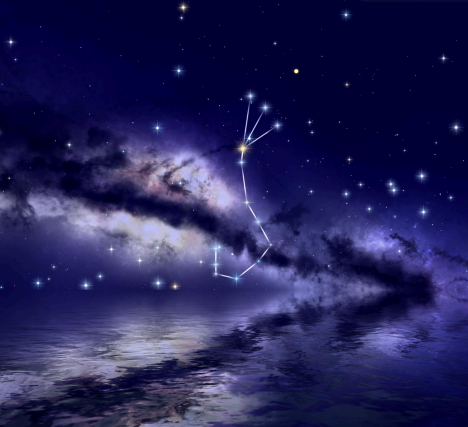
Figure 1: Depiction of the constellation Mānaiakalani. Scorpius, Star Walk 2, version 2.16.2.3, Vito Technology Inc., 20 March 2025.
In Hawaiian folklore, the mother of the demi-god Maui wanted him to catch the incredibly elusive Ulua fish for dinner (“Maui and the Creation” 0:23-0:40). Unfortunately, the trickster demi-god was not a good fisherman and was constantly ridiculed by his brothers. One day, yielding to his desperate pleas, Maui’s brothers finally allowed him to join them at sea. Secretly, mischievous deity that he was, Maui stole a magical family heirloom—a sacred bone called the Mānaiakalani, which he had “secured from his ancestors in the under-world”—for the next day of fishing (Westervelt 15). Immediately after the demi-god cast his great hook, the ocean floor began to rumble and massive waves started rocking the brothers’ boat (Westervelt 20). In a panic, Maui instructed his siblings to paddle hard and fast and under no circumstance to look back, otherwise the “fish would be lost” (Westervelt 20). Exhausted, however, one brother looked behind and saw that Maui had dragged a chain of islands from the depths of the sea to the surface (Westervelt 20). This is the creation story of the eight Hawaiian Islands.
Similarly, Maui is responsible for New Zealand’s existence in Maori mythology. According to the Maori tale, Maui loved fishing, but his brothers always refused to take him. One day, Maui snuck away during the night, hiding at the bottom of their canoe (Winter, “The Great Fish of Māui” 00:30-00:58), and waited until they were far out to sea before revealing himself. Unimpressed, his brothers decided to punish Maui by withholding their fishing bait. Maui, true to his cunning nature, punched himself in the nose and smeared the magic jawbone hook with his blood (Winter, “The Great Fish of Māui” 01:37-47). After launching his hook far out to sea, the scent of his blood attracted a great fish, or in some versions, a stingray (Westervelt 21). Hook in its jaw, the mighty creature dragged their canoe down. Unwilling to surrender the hook, Maui commanded his brothers to help him pull, and, eventually, the animal was hauled up to the ocean’s surface. Before leaving to retrieve the hook, Maui ordered his brothers to leave the fish alone to avoid damaging its smooth, flat appearance. However, upon his return, Maui discovered that his unruly brothers had disobeyed his instructions and already hacked into the great creature. It ultimately became a ragged, mountainous region (Gossage 03:00-4:50). This land, known as “the great fish of Maui,” is what we now recognize as New Zealand’s north island (Gossage 04:51-05:13). The south island represents Maui’s canoe, and Stewart Island is depicted as the anchor (Winter, “The Great Fish of Māui” 04:00-04:11).
Apart from a few minor variations, the Hawaiian and Maori legends about Maui’s fish hook share the same plot. In both tales, Maui goes out to sea with his brothers and uses his magical fish hook, resulting in the creation of the islands. The two stories connect Polynesians to their origins: the creation story of the islands they call home. In a broader sense, these myths symbolize the undeniable connection between the sea and its island inhabitants, regardless of where in the Pacific they reside. Maui’s inadvertent, yet greatest catch reveals the Polynesians’ profound understanding and appreciation for the environment. Despite the points of divergence between the two myths, in both the islands of Hawaii and New Zealand, respectively, come from the sea and are depicted as living beings. These tales demonstrate that the Polynesians did not see their land as an inanimate object but rather as a living creature with a spiritual consciousness.
The Pleiades, an “open cluster of young stars” in the Taurus constellation (“Pleiades”), are another prominent star group that illuminated the path for navigators (Fig. 2). Ancient Hawaiians referred to this group of stars as “Makaliʻi,” meaning “tiny eyes” (“Star Stories 4” 01:11-01:15). The term is a euphemism for greedy eyes (“Star Stories 4” 01:16-19). Connected to this star cluster is the story of Hawaiian Chief Makaliʻi. As the legend goes, the chief, for unknown reasons, desired to bring destruction to all of the Hawaiian Islands. He took all the food in the land, including roots, so there was virtually nothing to eat or grow. He collected all the islands’ resources in a carrying net, and, once full, tossed it into the starry heavens. The net got tangled and hung on a cluster of stars, the Pleiades (“Star Stories 4” 01:34-02:15). As the Hawaiian people were on the brink of starvation, a tiny iole (the Hawaiian word for mouse or rat) scampered up the arm of the evil chief and jumped into the sky. He leapt from star to star until finally reaching the net. The iole began to nibble on the ropes until eventually, all “the food, the plants, and the roots inside the net fell like rain all over the land” (“Star Stories 4” 02:41-03:33). In Hawaii, during Ho’oilo (winter season) from November to April, the Makaliʻi constellation is high in the night sky. The rising of these stars signaled a seasonal change to winter and the ancient Hawaiian New Year festival known as Makahiki. This was a sacred time for native Hawaiians to rest, feast, dance, and partake in religious festivities (“Makahiki”).
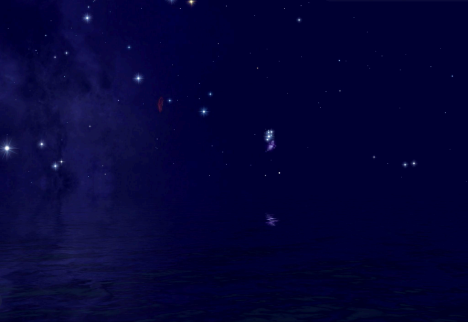
Figure 2: Depiction of the Pleiades constellation (small central cluster of stars). Pleiades, Star Walk 2, version 2.16.2.3, Vito Technology Inc., 20 March 2025.
The Maoris, on the other hand, call this group of stars “Matariki,” translating to the “Little Eyes” (Aveni 113). As legend has it, for all eternity Papatuanuku and Ranginui (the Earth Mother and Sky Father in Maori tradition) remained in a tight embrace with their many children living in the darkness between them. Restricted and unable to move, all but one of their children–Tāwhirimātea, the god of wind–wanted to break free. Tāne, the god of forests and birds, used the mighty strength of his legs to separate his parents’ seemingly unbreakable bond, thrusting Ranginui above and Papatuanuku below (Winter, “The Stars of Matariki” 00:31-00:53). Tāwhirimātea was furious. In his anger, he gouged out his own eyes, crushed them, and cast them into the galaxies. They landed on the chest of his father, making up the cluster we know today as the Pleiades (Winter, “The Stars of Matariki” 00:56-01:11). Every year, this star cluster appears in the night sky in late June or early July, New Zealand’s mid-winter months (Neilson-Jones). Similar to the ancient Hawaiian legend, the rise of Matariki symbolized the Maori New Year. Maoris took this time to thank the gods for the harvest and to feast with family and friends. Additionally, they believed the brightness of the Matariki stars signaled “how abundant the next year’s harvest would be” (Neilson-Jones). To welcome the new year, Maoris reflected on the past, honored the dead, and looked ahead to the future (“What is Matariki”). The Matariki festival is still celebrated today and remains an important part of Maori culture.
While the Hawaiian and Maori myths of the Pleiades constellation appear virtually unrelated, what they symbolize remains the same: the arrival of the changing seasons. The appearance of the Pleiades marked a time for reflection and growth, reinforcing the cycle of life and death. Hawaiians and Maoris alike took this time to honor those who had passed, celebrate the present with family and friends, and look forward to the promise of a new year (Neilson-Jones; cf. “Star Stories 4” 04:05-04:23). It is possible that, based on the Pleiades’ symbolism of rebirth and revival, this seasonal constellation manifested in a desire to begin new voyages across the sea. The emergence of this significant calendar constellation may have stimulated wayfarers to embark on nautical expeditions, leading to the widespread dispersal of Polynesian people and culture across the Pacific.
Ultimately, without the star lore of Maui’s Fish Hook, Chief Makaliʻi, and Matariki preserved in the starry heavens, Polynesian voyagers would not have been able to easily identify the Scorpius or Pleiades constellations. Both these constellations served as significant signposts during long and dangerous voyages. According to Hamacher and Guedes, spotting the hook of Maui was a helpful tool for orientational purposes, indicating “southeasterly travel.” As for the Chief Makaliʻi or Matariki cluster of stars, sources such as Finney’s Nautical Cartography and Traditional Navigation in Oceania as well as Elsdon’s “The Use of Stars in Navigation” do not specifically state which direction the Pleiades was used to navigate; however, these works do indicate that the Pleiades were among the “favourite guiding stars” of ancient Polynesian sailors (Elsdon 30).
For thousands of years, the Pacific people have migrated thousands of miles across temperamental waters with nothing more than double-hulled canoes and a profound mastery of their natural environment. To a certain extent, traversing the Pacific Ocean was undoubtedly only possible with a heightened awareness of physical surroundings, requiring an exhaustive survey of wind, clouds, sun, and sea conditions. Their most important navigational tool, however, was their ability to understand the language of the stars. Their expertise regarding the cosmos was due to the power of Polynesian celestial mythology. Maui’s twinkling hook, depicted in the Scorpius constellation, as well as the iridescent cluster of “tiny eyes,” depicted in the Pleiades cluster, are two examples of star mythology’s critical role in Polynesian circumnavigation. These stories, and other such myths inscribed in the stars, enabled countless risky journeys across an expanse of untrodden and perpetually black sea. These tales, forever etched in the starry heavens, are responsible for not only the eventual far-flung settlement of Polynesia but also the emergence of unique and shared cultural identities across the Pacific islands, ultimately “bind[ing] the scattered inhabitants of the Pacific into one nation” (Westervelt vii). Samoan poet Albert Wendt beautifully captures the astonishing spread of Polynesian culture in “Towards a New Oceania”: “So vast, so fabulously varied a scatter of islands, nations, cultures, mythologies and myths, so dazzling a creature […]” (202). It is truly remarkable to imagine how ancient Polynesian navigators relied primarily on their knowledge of the stars to traverse large bodies of water and discover new land, and how the celestial myths immortalized in the constellations of Scorpius and the Pleiades illuminated a route over treacherous open ocean, ultimately resulting in the widespread settlement of a culturally unified Pacific island region.
Works Cited
Aveni, Anthony. Star Stories: Constellations and People. Yale University Press, 2019. JSTOR, https://doi.org/10.2307/j.ctvqc6h0v.
Best, Elsdon. Astronomical Knowledge of the Maori. Dominion Museum Monograph No. 3, 1922. The Knowledge Basket,
www.knowledge-basket.co.nz/kete/taonga/contents/taonga/text/dm/dm3.html. Accessed 3 Nov. 2023.
Finney, Ben. “Nautical Cartography and Traditional Navigation in Oceania.” The History of Cartography, Volume 2, Book 3: Cartography in the Traditional African, American, Arctic, Australian, and Pacific Societies, edited by David Woodward and G. Malcolm Lewis, University of Chicago Press, 1998, pp. 443–492.
https://press.uchicago.edu/books/hoc/HOC_V2_B3/HOC_VOLUME2_Book3_chapter13.pdf. Accessed 3 Nov. 2023.
Gossage, Peter. “The Fish of Maui.” YouTube, uploaded by on3Three, 4 April 2016, www.youtube.com/watch?v=Nb9Y99KQG1k.
Hamacher, Duane W. and Guedes, Carla Bento. “How Far They’ll Go: Moana Shows the Power of Polynesian Celestial Navigation.” UNSW Newsroom, 15 Feb. 2017,
https://newsroom.unsw.edu.au/news/social-affairs/how-far-they%E2%80%99ll-go-moana-sh ows-power-polynesian-celestial-navigation. Accessed 18 Nov. 2023.
Kawaharada, Dennis. “Wayfinding, or Non-Instrument Navigation.” Polynesian Voyaging
Society, https://archive.hokulea.com/navigate/navigate.html. Accessed 8 Nov. 2023.
Khan, Miriam and Suggs, Robert Carl. “Polynesian Culture.” Encyclopaedia Britannica.
www.britannica.com/place/Polynesia. Accessed 18 Nov. 2023.
Lewis, David. “Polynesian Navigational Methods.” The Journal of the Polynesian Society, vol. 73, no. 4, 1964, pp. 364–74. JSTOR, http://www.jstor.org/stable/20704228
“Makahiki.” Haleakalā National Park (U.S. National Park Service),
www.nps.gov/hale/learn/historyculture/makahiki.htm. Accessed 12 Nov. 2023.
“Maui and the Creation of the Islands.” PBS LearningMedia,
https://www.pbslearningmedia.org/resource/echo07.lan.stories.maui/maui-and-the-creation-of-the-islands/. Accessed 1 May 2025.
Neilson-Jones, Kat. “What Is Matariki and Why Is It Important?” All About Whitianga, 4 July 2023,
www.allaboutwhitianga.co.nz/mercury-bay-news/events/what-is-matariki-and-why-is-it-important. Accessed 9 Nov. 2023.
“Pleiades.” Encyclopaedia Britannica. 20 Oct. 2023,
www.britannica.com/place/Pleiades-astronomy. Accessed 10 Nov. 2023
“Polynesia.” New World Encyclopedia. www.newworldencyclopedia.org/entry/Polynesia.
Accessed 10 Nov. 2023.
“Scorpius.” Encyclopaedia Britannica. www.britannica.com/place/Scorpius. Accessed 18 Nov.
2023.
“Star Stories 4 - The Legend of Chief Makaliʻi.” Produced by Center for Aerospace Education at Windward Community College, 2021. YouTube, uploaded by Hokulani Imaginarium, 22 Sep. 2021, www.youtube.com/watch?v=froFeW3lHoc.
Star Walk 2, version 2.16.2.3, Vito Technology Inc., 20 Mar. 2025.
Tamayose, Alan and De Silva, Shantell. “How Did Polynesian Wayfinders Navigate the
Pacific Ocean?” TED-Ed, 2017. YouTube, www.youtube.com/watch?v=m8bDCaPhOek.
Wendt, Albert. “Towards a New Oceania.” Writers in East-West Encounter, edited by Guy Amirthanayagam, Palgrave Macmillan, 1982, pp. 202–215. Springer,
https://doi.org/10.1007/978-1-349-04943-1_12.
Westervelt, W.D. “Legends of Ma-Ui, a Demi-God of Polynesia: And of His Mother Hina.” Hawaiian Gazette, 1910. HathiTrust,
https://hdl.handle.net/2027/coo1.ark:/13960/t5bc4jp3m. Accessed 9 Nov. 2023.
“What is Matariki?” Museum of New Zealand (Te Papa Tongarewa).
https://tepapa.govt.nz/discover-collections/read-watch-play/matariki-maori-new-year/what-and-who-matariki/what-matariki. Accessed 2 May 2025.
Williams, Madi. Polynesia, 900–1600. ARC Humanities Press, 2021.
https://doi.org/10.1515/9781641892155.
Winter, Marcus. “The Stars of Matariki - Ngā Whetu o Matariki (English).” YouTube, uploaded
by Marcus Winter The Sandman, 15 July 2020, www.youtube.com/watch?v=30V9_BUPt50.
Winter, Marcus. “Te Ika a Maui - The Great Fish of Māui - and how Aotearoa got its shape.
(In Sand).” YouTube, uploaded by Marcus Winter The Sandman, 11 March 2020, www.youtube.com/watch?v=cHspwLb3w3Q.
Zhang-Czirakova, Daniela. “Maui: Polynesian Culture Hero, Variations of Motifs in Maui’s Mythological Cycle in East and West Polynesia.” Journal of Sino-Western Communications, vol. 5, no. 2, Dec. 2013, pp. 148–52. ProQuest. Accessed 8 May 2025.
https://www.proquest.com/docview/1511433536/abstract/8307F8098831422EPQ/1